Strength Training for Older Adults: Build Strength, Stay Active & Age With Confidence
Getting older doesn’t mean you have to give up strength, mobility, or an active lifestyle.
In fact, maintaining your strength can become even more important as the years go by. Everyday activities such as climbing stairs, carrying groceries, getting up from a chair, or simply moving around comfortably all depend on your muscles working effectively.
That’s where strength training for older adults can make a meaningful difference.
You don’t need to become a powerlifter or spend hours lifting heavy weights. A consistent, appropriately scaled strength routine can help support muscle strength, mobility, balance, coordination, and independence as you age. Snap Fitness similarly highlights resistance training as an important part of healthy aging.

Why Strength Training Matters as You Get Older
Aging naturally brings changes to the body. Muscle mass and strength can decline over time, while joint stiffness and changes in physical function may make some everyday movements more challenging. Snap Fitness notes that muscle mass and strength peak earlier in adulthood and decline later in life, with the decline becoming more pronounced at older ages.
But getting older doesn’t mean becoming inactive.
Regular strength training can provide your body with a reason to keep using and developing its muscles. It can also complement other forms of physical activity as part of a broader approach to staying active.
Think of strength training less as a way to “get big” and more as a way to keep doing the things you enjoy.
That could mean playing with grandchildren, traveling, gardening, walking around your neighborhood, or carrying your own shopping bags.
The Benefits of Strength Training for Older Adults
So, what makes strength training such a valuable part of senior fitness?
1. Helps Maintain Muscle Strength
Muscle strength plays a role in everyday movement. From standing up to carrying objects, your muscles are involved in countless activities.
Resistance exercises can help older adults maintain muscle and, with appropriate training, build strength. Snap Fitness cites evidence that strength training can support muscle maintenance and muscle growth even among adults over 70.

2. Supports Balance and Coordination
Strength isn’t just about how much weight you can lift.
Your legs, hips, core, and upper body all contribute to stability and coordinated movement. Exercises that challenge these areas can support the physical abilities needed for everyday activities.
For older adults, this can make strength and balance work an important part of an overall fitness routine.
3. Helps Support Everyday Independence
One of the biggest goals of healthy aging is being able to continue doing everyday activities independently.
Strength training can target movements that have practical carryover into daily life—such as pushing, pulling, standing, stepping, and lifting.
The goal isn’t necessarily to set a personal record.
The goal is to keep your body capable.
4. Supports Bone and Overall Physical Health
Strength training places a controlled demand on the body. Snap Fitness identifies maintaining muscle mass, stimulating bone growth, and retaining motor function among the reasons resistance training can be valuable as people age.
Because individual health circumstances vary, older adults should choose exercises and training loads appropriate to their abilities and discuss new exercise programs with a qualified healthcare professional when appropriate.
5. Can Contribute to a Better Quality of Life
Fitness isn’t only about numbers on a scale or the amount of weight on a bar.
Being physically capable can make it easier to participate in the activities you value. Strength training can therefore be one component of a lifestyle focused on staying active and independent.
5 Strength Exercises for Seniors to Consider
If you’re wondering where to begin, focus on movements that train different areas of the body without making the workout unnecessarily complicated.
Here are several exercises featured by Snap Fitness that can form part of an older adult strength-training routine.
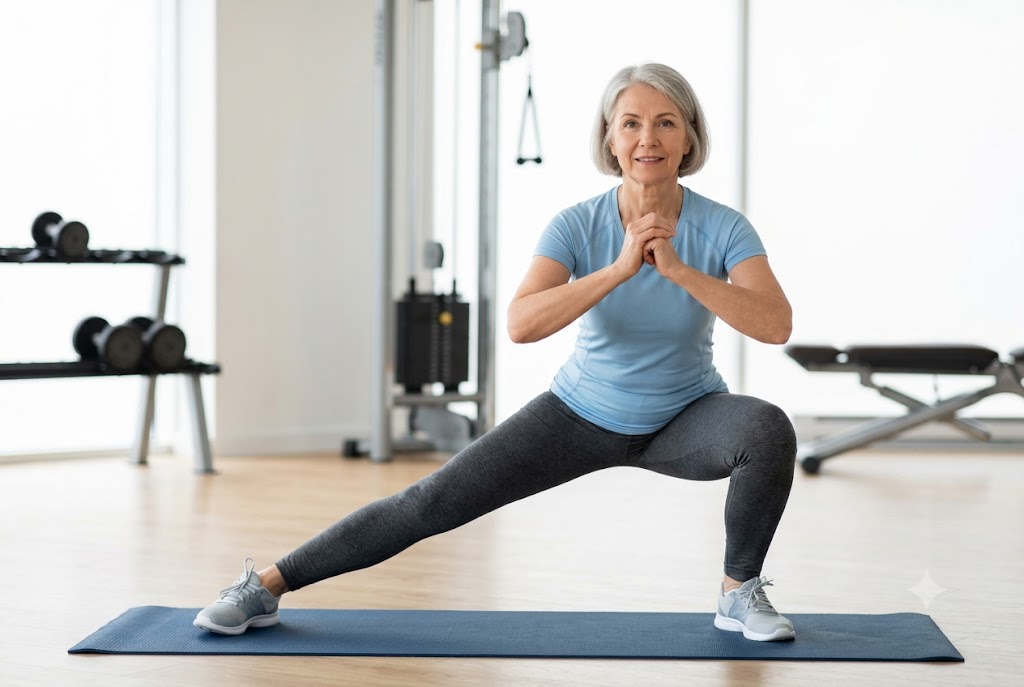
1. Side Squat
Focus: Balance and lower-body stability
A side squat involves shifting your weight from one side to the other while working through a squat movement.
It can be useful for practicing controlled lateral movement and lower-body strength.
Beginner tip: Use a sturdy support for balance if needed, and prioritize controlled movement over depth.
2. Dead Bug
Focus: Core engagement
The dead bug is performed lying on your back while moving opposite limbs in a controlled pattern.
It’s designed to challenge core control while requiring coordination between the upper and lower body.
Trainer tip: Maintain control throughout the movement rather than rushing through repetitions. Snap Fitness specifically recommends keeping the lower back pressed toward the floor during this exercise.
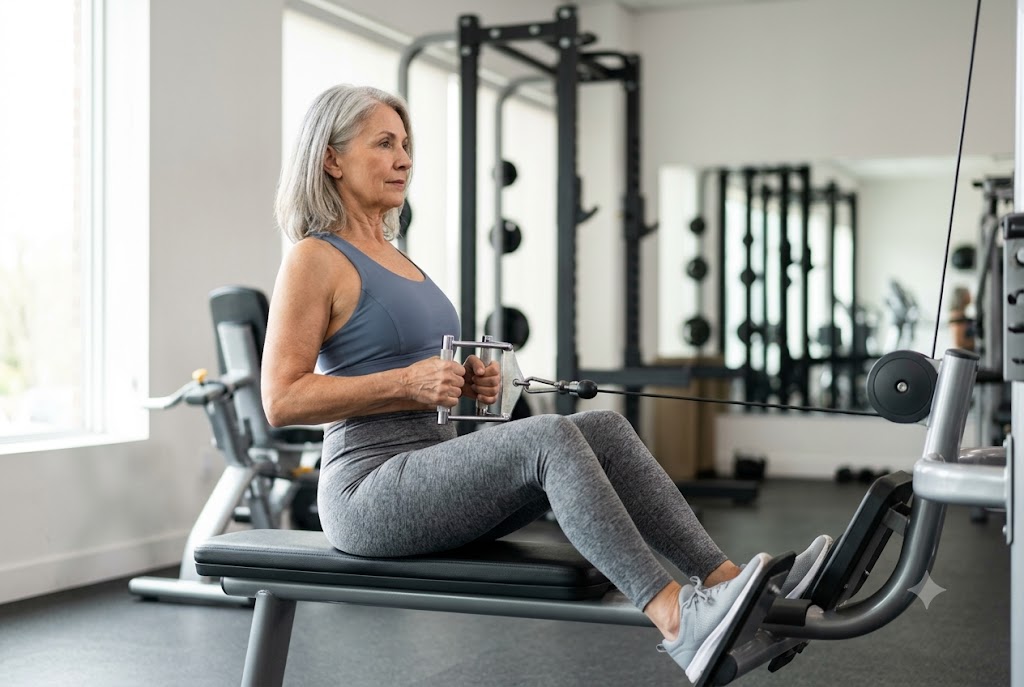
3. Seated Cable Row
Focus: Upper-body strength
A seated cable row works the muscles involved in pulling. It can be performed while seated, making it a useful option for incorporating upper-body resistance work into a gym routine.
Keep your back controlled, your chest lifted, and avoid using excessive momentum.
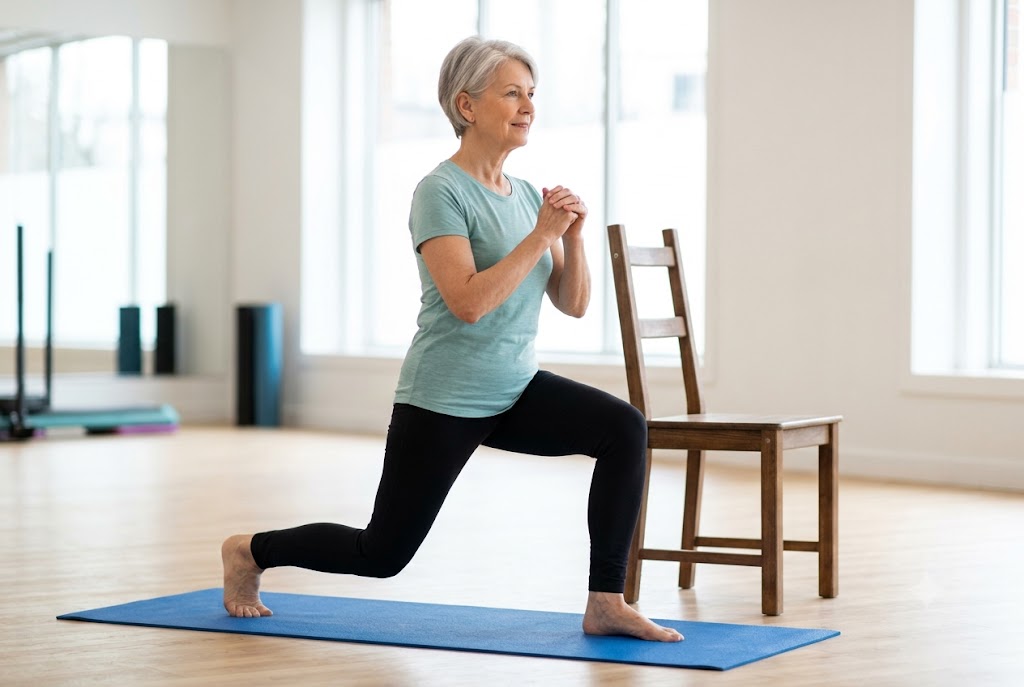
4. Stationary Lunge
Focus: Lower-body strength
Stationary lunges challenge the legs while requiring control and stability.
For older adults, exercise selection should always account for individual balance, mobility, experience, and health considerations.
If a movement feels unstable or painful, stop and seek appropriate professional guidance rather than pushing through it.
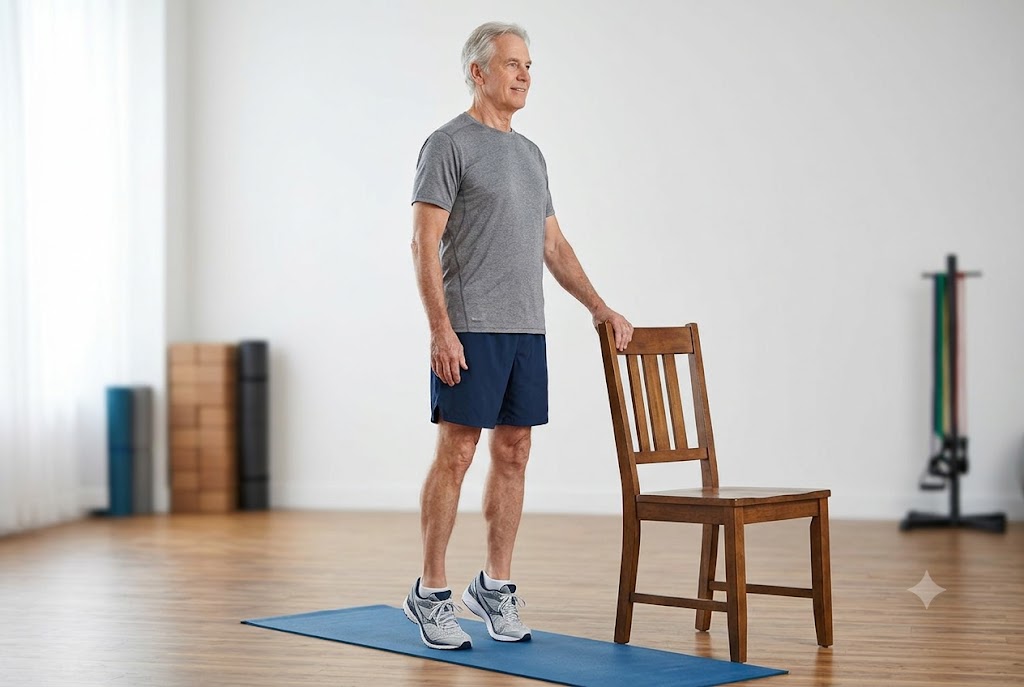
5. Standing Calf Raise
Focus: Calf strength
This simple movement involves raising your heels from the floor and slowly lowering them again.
It requires little equipment and can be incorporated into a beginner-friendly routine. Snap Fitness recommends controlled repetitions and notes a 1–3 second hold at the raised position in its example.
How to Start Strength Training Safely
Starting doesn’t have to be complicated.
If you’re new to exercise, begin with manageable movements and focus on learning good technique. Snap Fitness recommends starting with relatively low repetitions and one or two sets, then gradually increasing repetitions or sets as strength and confidence improve.
Start Light
Resistance bands can be a practical starting point because they come in different resistance levels and allow you to progress gradually.
Use Support When You Need It
A sturdy chair or countertop can provide additional balance during standing exercises. Support isn’t a sign that you’re doing something wrong—it can help you concentrate on controlled movement and proper form.
Focus on Consistency
A sustainable routine is more useful than an overly ambitious workout that you can’t maintain.
Start at a level that fits your current ability and build gradually.
Learn Proper Form
Good technique matters. If you’re unfamiliar with an exercise, consider working with a qualified fitness professional who can demonstrate appropriate form and modifications.
And if you have existing health concerns or are beginning a new exercise program, speak with an appropriate healthcare professional before getting started.
Strength Training Doesn’t Have to Feel Intimidating
One of the biggest misconceptions about strength training for seniors is that you have to lift heavy weights to make it worthwhile.
You don’t.
Strength training can be adapted to different fitness levels, abilities, and goals. The right starting point might involve bodyweight movements, resistance bands, light weights, machines, or supported exercises.
The important thing is finding a routine that is appropriate for you and progressing at a sensible pace.
Make Strength Part of Your Healthy-Aging Routine
Strength training works best as part of a broader active lifestyle.
Walking, mobility work, cardiovascular activity, balance exercises, adequate recovery, and other healthy habits can all play a role in supporting physical function as you age.
The key is to think beyond a single workout.
You’re building a foundation for movement.
You’re practicing the physical skills that help you remain active.
And you’re investing in the ability to keep participating in everyday life.
It’s Never Too Late to Start Moving
You don’t have to wait until you feel weaker to start thinking about strength.
Whether you’re in your 40s, 50s, 60s, 70s, or beyond, an appropriately designed strength-training routine can be one way to support an active approach to aging. Snap Fitness emphasizes that it’s possible to begin building and maintaining strength later in life, while recommending appropriate professional guidance for people starting a new exercise routine.
Start with what you can do today.
Choose movements you can perform safely.
Focus on control rather than ego.
Then build from there.
Ready to Make Strength Part of Your Routine?
Aging is something we all experience. Losing the ability to move confidently doesn’t have to be the goal.
With the right approach, strength training can become a practical part of staying active, capable, and independent.
If you’re considering getting started, visit a local gym, speak with a qualified fitness professional, and find a starting point that fits your current abilities.
Your stronger years don’t have to be behind you—they can be the years you learn to move with more confidence.